
Community Health Update: Measles
Posted on July 20, 2026 in Latest News
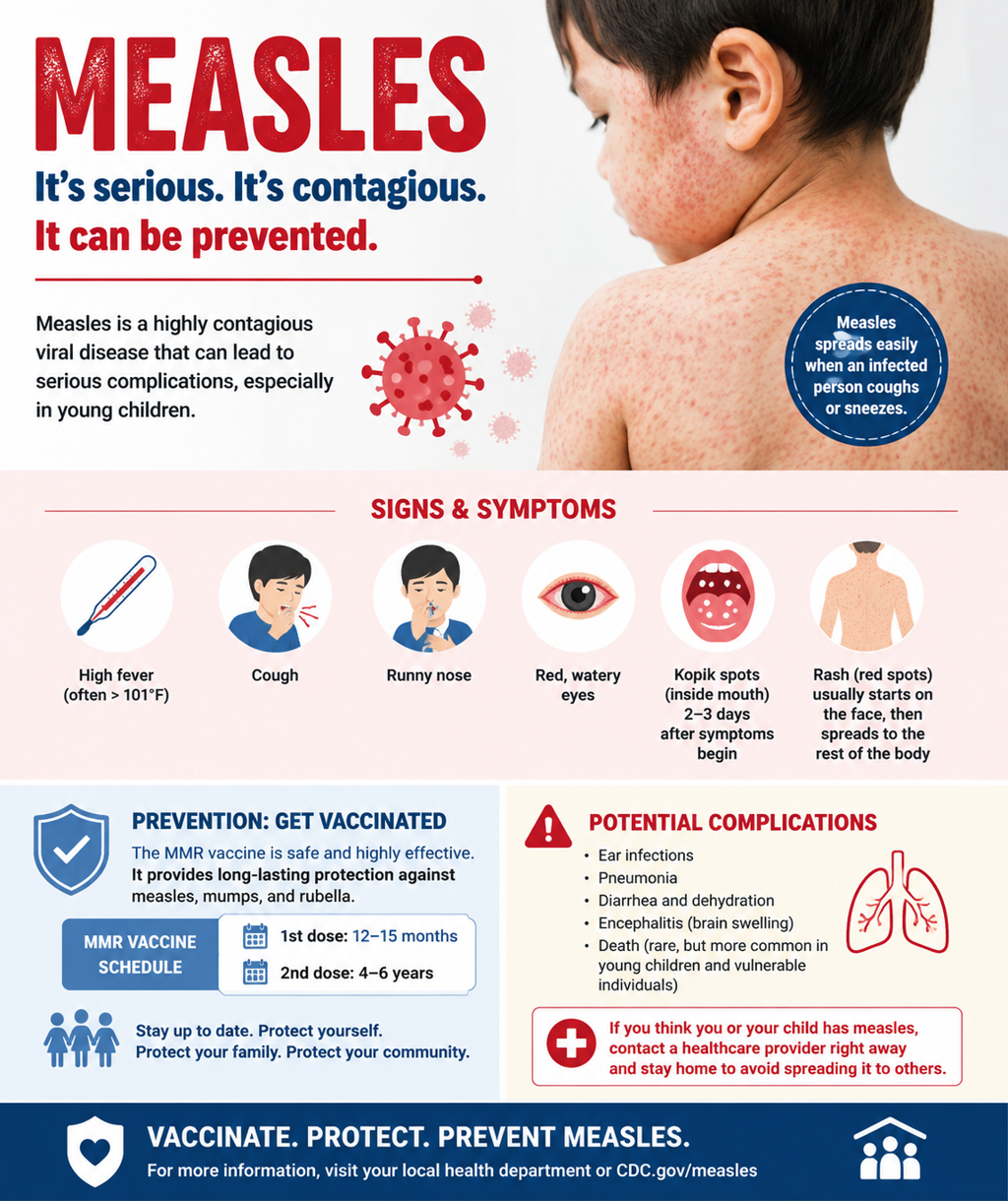
Measles spreads very easily. The best way to protect yourself and your family is to make sure everyone is up to date on their vaccines.
On June 24, 2026, the Pennsylvania Department of Public Health (DOH) announced a measles outbreak in several counties across Pennsylvania. Clickthe link to learn about cases by county.
What Patients Should Know
The best way to protect yourself and your family is to ensure everyone in your household is up to date on recommended vaccinations, including the measles, mumps and rubella (MMR) vaccine.
The MMR vaccine is highly effective, providing protection for 95–99% of people who receive it. Vaccination remains the safest and most effective defense against measles, a highly contagious disease that can lead to serious health complications.
The MMR vaccine is recommended for people who will be traveling internationally and are not fully protected.
What is measles?
Measles is a highly contagious viral illness that primarily affects the respiratory system. It spreads through the air when an infected person coughs, sneezes, talks, or even breathes. The virus can remain in the air and on surfaces for up to two hours after an infected person has left the area, making it one of the most easily transmitted infectious diseases.
To put its contagiousness into perspective, many common viruses spread to only a few other people. Measles, however, can spread to 12 to 18 susceptible individuals from a single infected person, making it one of the most contagious viruses known. Anyone who is not immune through vaccination or previous infection is at risk of becoming infected after exposure.
What are the symptoms of measles?
Symptoms typically appear 7 to 14 days after exposure and often begin with flu- or cold-like symptoms before the characteristic rash develops.
Early symptoms may include:
High fever
Cough
Runny nose or nasal congestion
Red, watery eyes (conjunctivitis or "pink eye")
Small white spots inside the mouth, known as Koplik spots, which may appear two to four days before the rash and usually disappear shortly after the rash begin
A few days after these initial symptoms, a red, blotchy rash typically develops. The rash usually starts on the face and along the hairline, then spreads downward to the neck, trunk, arms, legs and feet. The fever often rises as the rash spreads.
People with measles are contagious from about four days before the rash appears until four days after it develops, allowing the virus to spread before many people realize they are infected.
Why are measles serious?
While some people recover from measles without complications, the infection can lead to serious health problems, particularly in infants, young children, pregnant individuals, older adults, and people with weakened immune systems. Potential complications include:
Pneumonia, which is one of the most common serious complications of measles
Ear infections, which can lead to hearing loss in some cases
Swelling of the brain (encephalitis), which can result in seizures, long-term disability, or other serious complications
Death, although uncommon, can occur from severe complications of measles
Before widespread vaccination, measles was a common illness that affected many children each year. Thanks to highly effective vaccination programs, measles became rare in the United States. However, declining vaccination rates and increased global travel have contributed to a rise in measles cases and outbreaks in recent years.
There is no specific cure for measles. Antibiotics do not treat the measles virus, and antiviral medications are not routinely available to treat the infection. Care focuses on managing symptoms, preventing complications, and monitoring those at higher risk for severe illness.
Current Pennsylvania Department of Health (PA DOH) guidance includes:
Infants (6–11 months): Infants between 6 and 11 months of age who may be at increased risk of exposure, such as during an outbreak or before international travel, may receive one early dose of the MMR vaccine. This dose provides temporary protection but does not count toward the routine vaccination schedule. These children should still receive the recommended two-dose series beginning at 12 months of age.
Children needing vaccination: Children 12 months of age and older who have not yet been vaccinated should begin the two-dose MMR vaccine series as soon as possible. The second dose may be given at least 28 days after the first dose, allowing children to become fully protected sooner when there is an increased risk of measles exposure. Children who have already received one dose can also receive their second dose as long as at least 28 days have passed since the first.
Adolescents and adults who need vaccination: Anyone 12 months of age or older who has not been vaccinated or who lacks evidence of immunity should receive a two-dose MMR vaccine series, with the doses separated by a minimum of 28 days. Adults who are unsure of their vaccination status should talk with their healthcare provider to determine whether vaccination is recommended.
Individuals born before 1957: People born before 1957 are generally considered immune because measles circulated widely before the vaccine became available. However, adults in this age group who do not have evidence of immunity and who may be at increased risk should discuss vaccination with their healthcare provider.
Fully vaccinated individuals: People who have received two documented doses of the MMR vaccine are considered fully vaccinated and do not need an additional booster dose under current recommendations.
People with weakened immune systems: Because the MMR vaccine contains a live, weakened virus, it is not recommended for everyone. Individuals with certain medical conditions or those receiving treatments that suppress the immune system, such as chemotherapy, transplant-related medications, or other immunosuppressive therapies, should consult their healthcare provider before receiving the vaccine. Vaccinating those who can safely receive the MMR vaccine also helps protect people who cannot be vaccinated by reducing the spread of measles within the community.
How can I protect myself and my family during a measles outbreak?
The best way to prevent measles is to ensure that everyone in your household is up to date on recommended vaccinations, including the measles, mumps and rubella (MMR) vaccine.
Because measles spreads so easily, it is especially important to protect individuals who cannot receive the vaccine or may be at higher risk for complications, including:
Infants who are too young to complete the routine vaccine series
People with certain immune system conditions or those receiving immune-suppressing treatments
Individuals who are unable to receive the vaccine for medical reasons
During a measles outbreak, people who are not immune should follow guidance from public health officials and healthcare providers. This may include avoiding known exposure to individuals with measles, limiting time in areas where active transmission is occurring, and taking additional precautions if traveling to locations experiencing outbreaks.
What should you do if you think you have been exposed to or infected with measles?
Have you received the MMR vaccine? If yes, two doses provide protection for life for about 95–99% of people who receive them. If you have been exposed and are experiencing symptoms, because measles is highly contagious, it is important to call your healthcare provider before going to a medical office, urgent care center, emergency department, or other healthcare facility.
If the MMR vaccine is so effective and most people in the U.S. are vaccinated, why are measles cases increasing?
The MMR vaccine is one of the most effective vaccines available. Two doses provide protection for about 95–99% of people who receive them.
However, measles is one of the most contagious viruses known. Because it spreads so easily through the air, even a single person with measles can expose many others, especially in settings where people gather closely.
To help prevent measles from spreading within a community, approximately 95% or more of the population needs to be immune. This level of protection, known as community or herd immunity, helps limit transmission and protects people who cannot be vaccinated or who may not develop full protection from the vaccine. While overall vaccination rates in the United States remain high, coverage is not evenly distributed. Some communities and geographic areas have vaccination rates below the level needed to prevent outbreaks, allowing measles to spread more easily when introduced.
Recent outbreaks have occurred in some communities with lower vaccination rates, including areas where vaccine hesitancy or limited access to healthcare have contributed to fewer people being protected. When measles enters a population with gaps in immunity, it can spread quickly among people who are not immune.
People who may be vulnerable to measles exposure include those who:
Are too young to receive the routine MMR vaccine
Cannot receive the vaccine because of certain medical conditions
Have weakened immune systems and may not respond fully to vaccination
Have not received recommended vaccine doses
Choose not to vaccinate
Are among the small number of people who do not develop immunity after vaccination
Keeping vaccination rates high across all communities is the most effective way to prevent measles outbreaks and protect those who are unable to be vaccinated or are at higher risk for severe illness. Because measles spreads so easily, the virus can quickly move through areas where there are gaps in immunity. Staying current on recommended vaccinations helps stop the spread by breaking the chain of transmission and providing protection for the entire community.
How to get the MMR vaccine:
Please call your primary care office for details, or check with your local pharmacy.